
At a price index of 70, the same $40,000 life costs $28,000 a year, and the 4% FIRE number falls from $1,000,000 to $700,000.
That index is a number you type, not a city ranking and not a tax ruling. Change it with a source you trust, or with a round assumption you label as your own.
How much does the same life cost somewhere else?
Geographic arbitrage means funding a familiar life from a place with a different price level, so the portfolio replaces a different amount of spending. The label is older than any calculator. For FIRE it is still just spending, savings and a withdrawal rate. A 30 percent discount is a hypothesis you type. This page does not assign that discount to a city.
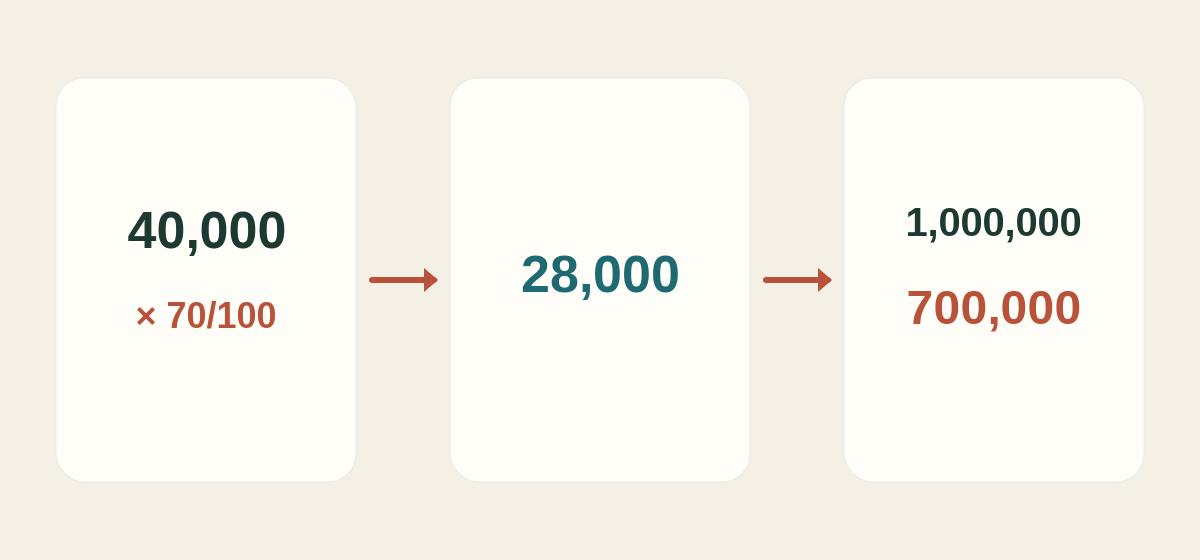
| Example place | Cost index | Same lifestyle, per year | FIRE number at 4% |
|---|---|---|---|
| Where you live now | 100 | $40,000 | $1,000,000 |
| The opening lower-price place | 70 | $28,000 | $700,000 |
| Half of today's price level | 50 | $20,000 | $500,000 |
| Twenty percent higher prices | 120 | $48,000 | $1,200,000 |
How much is the FIRE number in the opening example?
The worked example uses the calculator's opening inputs, not a city table. Current spending is $40,000, the portfolio is $200,000, and annual savings are $20,000, one third of a $60,000 income. The withdrawal rate is 4 percent. The current index is 100 and the target index is 70, so equivalent spending is $28,000. A one-off relocation cost of $15,000 leaves $185,000 invested, and the continuing $60,000 income lifts savings from $20,000 to $32,000.
Open the Geo-Arbitrage FIRE Calculator →
How many years sooner could that move be?
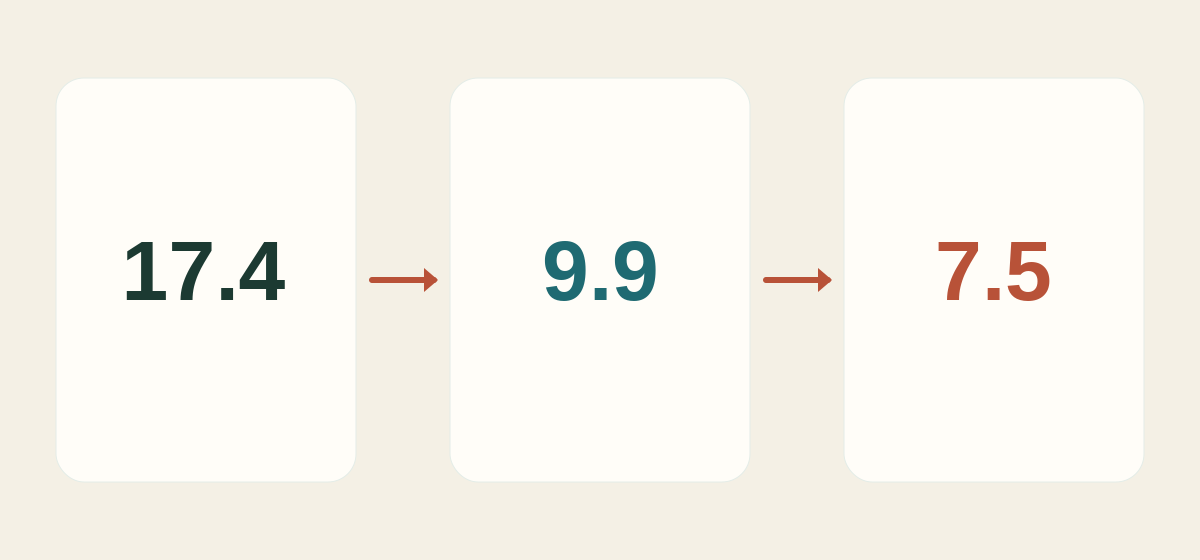
The same portfolio projection used by the Five FIRE Paths calculator, with a 7 percent nominal return and 2 percent inflation, puts staying at 17.4 years and the move at 9.9 years. The gap is 7.5 years. Spending and new savings both rise with inflation, and the solver steps by 0.1 year up to 80 years. A different return, a pay cut, or a larger moving bill changes the gap. The sentence on the calculator is the verdict for the numbers you type next.
What can a lower price level improve?
A lower price level can shrink the portfolio that has to fund spending, and it can raise savings when income does not fall. In the example the FIRE number drops by $300,000, from $1,000,000 to $700,000, and annual savings rise by $12,000. That pair of effects is the arithmetic people mean by geographic arbitrage. It still does not prove that a household will like the new place, or that a remote employer will keep the wage.
What can erase those saved years?
Taxes, healthcare, visas, currency and lifestyle can erase a 7.5 year gap. A residence permit can fail. A health plan can cost more than the rent you saved. Spending the portfolio in another currency adds a swing that a 4 percent withdrawal rate does not model. OECD purchasing power parities and the World Bank International Comparison Program publish price-level comparisons you can type in. Numbeo's explanation describes a crowdsourced index, so treat it as a prompt rather than official statistics. None of those sources is your household budget.
How is this different from moving for a tax reason?
Geographic arbitrage rescales spending, while a geographic cash-out asks where the gains are taxed. A 4 percent withdrawal rate still has to be funded after the tax bill. The Netherlands and Belgium article follows tax timing and tax base, not a grocery index. A cheaper market does not answer a residence question, and a tax comparison does not set your cost index. Use the cash-out tax calculator for that tax path and the country retirement comparison for retirement-age and wealth context across countries. Then put your own price index back into the geo-arbitrage calculator.
Frequently asked questions
Is geographic arbitrage just moving somewhere cheap?
Geographic arbitrage is a spending test, not a travel plan and not a ranking of cities. You keep one life in view and ask what that life costs at a second price level. The portfolio target is that spending divided by a withdrawal rate you choose, so a lower price level lowers the target only when the spending cut is real. A cheap headline index can still hide school fees, flights home, or a health plan that costs more than the rent you saved.
Why can savings rise when prices fall?
Savings in this model are what remains after spending, as long as the income continues. Spend $40,000 from a $60,000 income and you save $20,000. Spend $28,000 from that same income and you save $32,000. The FIRE number falls and the annual investment rises together. A pay cut removes the second effect. Set the income-kept control below 100 percent and the calculator shows the smaller, or negative, savings.
Does a lower FIRE number mean the move is wise?
A lower FIRE number is an arithmetic result, not a decision. The worked example saves 7.5 years only with a 70 index, a $15,000 moving bill, a 4 percent withdrawal rate, a 7 percent return and 2 percent inflation. Taxes, visas, healthcare, currency risk and whether you want the life are outside that sentence. Use the cash-out tax article when the question is where gains are taxed, then put your own index back into the calculator.
Check the sources
These references support the methods and context discussed here. Personal examples and scenario assumptions do not establish universal outcomes.