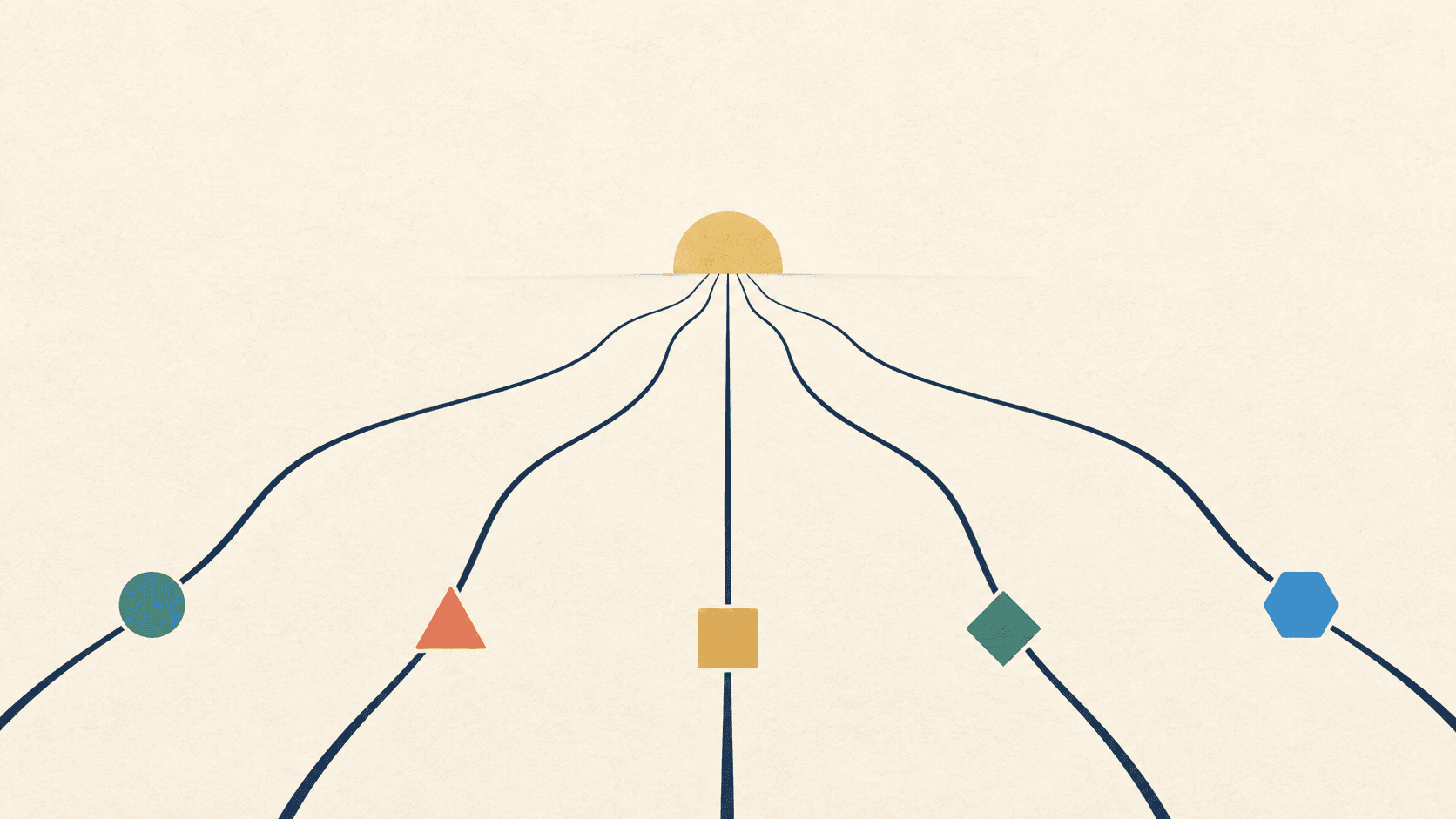
In the FIRE world, "early" rarely means one birthday. It means paid work has become optional before the age at which your country, employer or social circle expected it. For some people that is 38. For others it is 52. The meaningful question is not how impressive the age looks; it is whether the plan can support an ordinary life for a very long time.
FIRE stories often foreground the dramatic version: someone leaves a career in their thirties or forties. Those stories are possible, but they are not the only shape of financial independence. Many people reach a form of work-optional life in their late forties or fifties; some keep a small amount of chosen work long after their original number is reached.
There is no central registry for the FIRE community, so there is no reliable average retirement age to quote. It is more honest to say that FIRE usually means retiring before conventional pension age, with the thirties, forties and fifties all represented. What changes most is not the label. It is the length of time your money may need to work and the amount of uncertainty you are willing to carry.
Earlier retirement buys time—and asks more of the plan
Retiring at 35, 45, 55 or 65 is not a simple ranking from brave to cautious. Each age changes the design problem.
- In your 30s: the portfolio may need to cover five or six decades. Health insurance, family plans, housing changes and future work preferences are less certain. A lower starting withdrawal rate, a flexible income option or a larger buffer can matter more than a very precise spreadsheet.
- In your 40s: earnings may have been high for longer, but lifestyle costs can also be more established. Children, education, caring responsibilities and a larger home may be part of the picture. This is often a period where partial FIRE or a smaller independent income meaningfully reduces pressure on the portfolio.
- In your 50s: the time horizon is still long, yet pension access or later-life public benefits may be closer. Many people find this a psychologically easier transition point because their identity, spending and family needs are clearer. It is still not automatically safe: an expensive decade or an early market drawdown can matter enormously.
- In your 60s: conventional retirement may be close, and other income sources may be more visible. The portfolio may need to bridge fewer years before pension or social-security income begins. But health, caregiving and the desire to leave a legacy can still make the required number larger than expected.
The point is not that one age is right. A 42-year-old with low essential spending, a cash buffer and some flexible income may have a more resilient plan than a 59-year-old with high fixed costs and no room to adjust.
Withdrawal rate changes the number more than most people expect
Your initial withdrawal rate is the annual amount you plan to take from your portfolio, divided by the portfolio's starting value. It is one of the clearest links between your desired lifestyle and your FIRE number.
For a simple illustration, imagine a household with $40,000 of annual spending that must all come from investments:
| Starting withdrawal rate | Illustrative portfolio needed |
|---|---|
| 4.0% | $1,000,000 |
| 3.5% | about $1,143,000 |
| 3.0% | about $1,333,000 |
The arithmetic is simple: annual portfolio spending divided by withdrawal rate. But the choice is not simple. A lower rate asks for a larger portfolio or a lower lifestyle cost; in exchange, it leaves more room for a long retirement, poor early returns and uncertainty. A higher rate makes retirement arrive sooner on paper, but gives the plan less margin.
The famous 4% rule came from historical U.S. research on a particular kind of 30-year, inflation-adjusted withdrawal plan. It was never a promise for every country, asset mix, tax system, retirement age or future market. More recent research has also produced different estimates as valuation and yield assumptions changed. For example, Morningstar's 2025 retirement-income research reported a 3.9% base-case starting rate under its own 30-year and 90%-success assumptions. Read the assumptions, not only the headline: Morningstar's 2025 retirement-income research.
If you retire very young, your horizon may be far longer than thirty years. That does not automatically mean 4% is "wrong." It means a sensible plan should not lean on one rule of thumb alone. Flexibility, taxes, pensions, health coverage, cash reserves and the ability to earn a little can all change the real risk.
Lean, traditional and Fat FIRE are different bargains
The same person can have several valid FIRE numbers, because spending is a choice as well as a fact.
- Lean FIRE covers a deliberately modest lifestyle. It can bring work-optional life closer, especially for people whose core needs are genuinely low. Its vulnerability is that there may be little room for a rent increase, a family need, a health cost, a market fall or simply a desire for more generosity and ease.
- Traditional FIRE aims to cover a comfortable, ordinary version of life: housing, food, transport, health, social life, modest travel and some surprises. It often gives more emotional room than Lean FIRE, but takes longer to build.
- Fat FIRE funds a more expansive lifestyle and usually includes a larger safety margin in absolute dollars. It can make expensive cities, frequent travel, private services or generous family support easier. The trade-off is time: every extra recurring dollar of spending raises the number you need to make work optional.
None of these is morally superior. The real mistake is treating a Lean number as if it will comfortably fund a Fat life, or delaying a life you already enjoy because a bigger number has become a moving target.
There is no golden age; there is a stronger definition of ready
People often ask whether 45, 50 or 55 is the ideal age to stop working. It is understandable: an age feels concrete. But a birthday cannot reveal whether your expenses are stable, your portfolio is diversified, your health insurance works, or whether you will panic when markets fall.
A more useful question is: what would make this plan resilient enough that I can stop needing a full-time job? A stronger answer usually includes the following.
- Your necessary spending is known. Not your ideal lifestyle budget; the amount that keeps a normal household running, including irregular costs.
- Your withdrawal rate matches your horizon and flexibility. You understand what number it produces and why you chose it.
- You have cash or very stable income for difficult years. A two- to three-year cash buffer is not required for everyone, but it can reduce the chance of selling volatile assets after a bad start.
- You can reduce discretionary spending when needed. Fewer trips, delayed upgrades or a temporary lower-cost year can buy valuable recovery time after a drawdown.
- Health care, tax and pension details are not blank cells. They should be part of the plan, especially when retiring before public benefits begin.
- You have thought about what your days are for. Financial independence is more stable when it is supporting a life with relationships, health, useful activity and rest—not only an escape from work.
When these pieces are in place, the phrase "I can retire" becomes less about a triumphant date and more about options. You might leave completely, work two days a week, take a long break, change careers, or stay in a job you like because you no longer need it.
See several paths at once: Open the Five FIRE Paths Calculator →
Choosing an age is only half the problem. You also need to connect the years in which you are still contributing with the years in which spending, inflation, pensions and taxes begin drawing on the portfolio. Our lifecycle tool puts both phases on one timeline.
Test the complete journey: Open the Retirement Lifecycle Calculator →
A number can be a floor, not a finish line
Suppose your essential spending is $40,000. A $1 million portfolio at a 4% starting withdrawal rate may be a useful reference point. It does not have to be the moment you hand in your notice.
You might prefer to keep building until a lower rate feels more comfortable. You might reach the number and keep enjoyable work for another two years, using that income to fund travel or strengthen the cash buffer. Or you might leave earlier because your spending can fall, your partner has income, or a small independent project reliably covers part of your needs.
The right move depends on the whole system. A FIRE number is not a verdict about whether you are allowed to live. It is a planning marker that helps you compare choices.
This article is educational, not personal financial advice. It cannot determine your suitable withdrawal rate or retirement date. But it can replace one unhelpful question—"What is the perfect age?"—with a better one: "What combination of assets, spending, flexibility, health coverage and purpose would let me choose my time with confidence?"