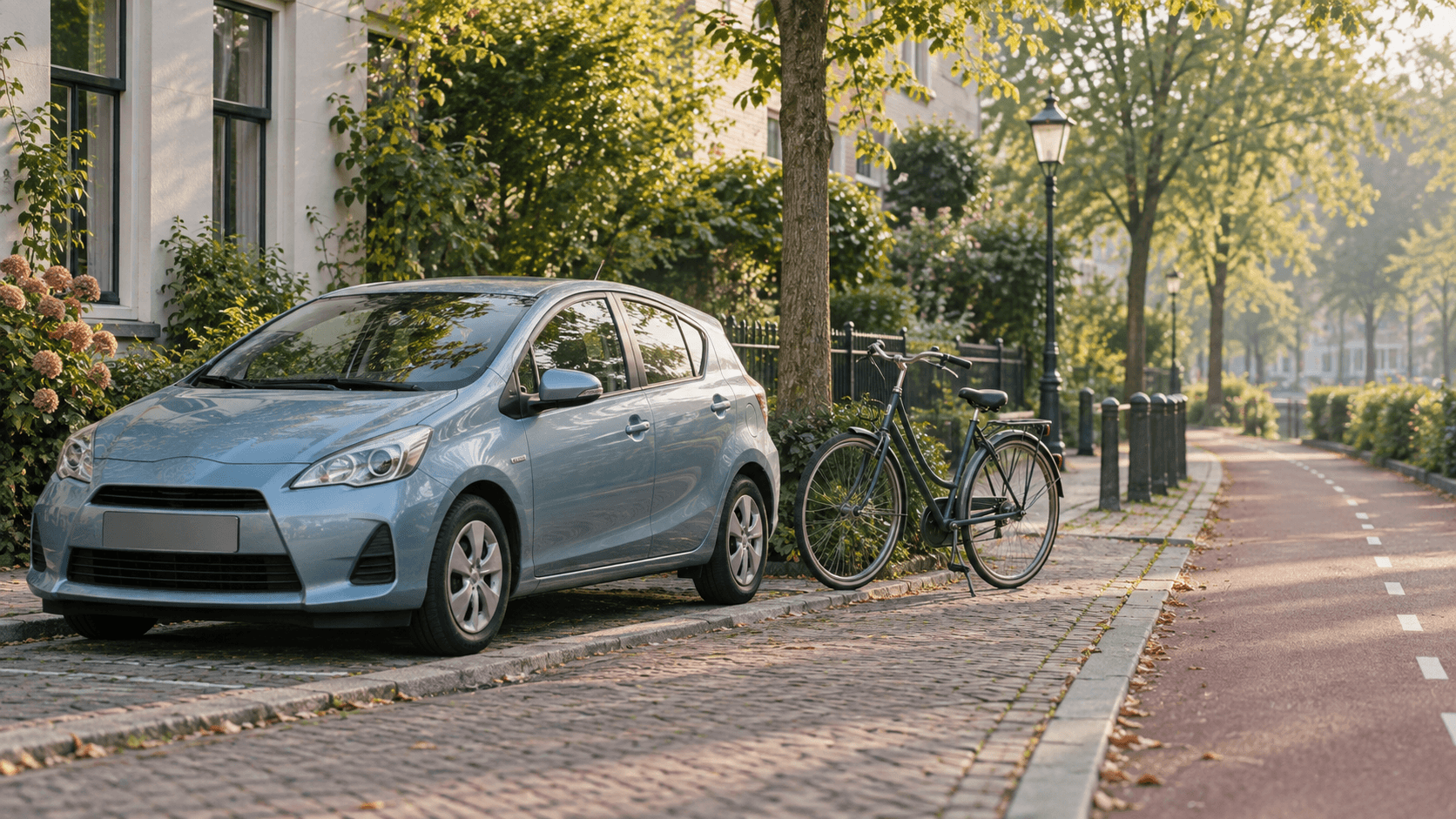
A car can be useful, enjoyable and sometimes genuinely necessary. It can also quietly become one of the most expensive recurring systems in a household—long after the day you buy it.
For many families, housing is the obvious giant cost. The car is often the quieter second one. It does not arrive as one monthly bill, so it is easy to underestimate: fuel or electricity, insurance, annual taxes and registration, servicing, tyres, repairs, parking, tolls, financing, depreciation and the occasional large surprise.
Each line can look manageable by itself. Together, over five or ten years, they can absorb a startling amount of the money that might otherwise buy flexibility: a cash buffer, lower working hours, investments, a better home location, or simply a less pressured life.
This is not an argument that everyone should sell their car. It is an argument to stop treating the sticker price as the whole decision.
The purchase price is only the admission ticket
It is tempting to compare cars through one question: “What is the monthly payment?” That question leaves out most of the system. AAA's 2025 Your Driving Costs study separates the cost of a new vehicle into depreciation, financing, fuel, insurance, licence/registration/taxes, and maintenance, repairs and tyres. The categories will differ by country and driver, but the habit of looking at all of them travels well.
Think of the annual cost as a small household budget of its own:
| Cost to count | Why it is easy to miss | What usually changes it |
|---|---|---|
| Depreciation | You do not write a cheque for it each month; it appears when you sell or trade in. | Age, model, mileage, condition, demand and purchase price. |
| Fuel or electricity | Small fills or charging sessions feel routine rather than like a major bill. | Distance, efficiency, home charging access and energy prices. |
| Insurance and tax | They may be paid annually and become invisible after the first renewal. | Location, driver history, vehicle value, power, weight and local rules. |
| Maintenance, repairs and tyres | They arrive unevenly, often just after you thought the car was “cheap.” | Reliability, age, mileage, parts cost, labour and driving conditions. |
| Parking, tolls and finance | They are often filed under commuting or lifestyle rather than transport. | City, employer parking, loan terms and how often the car is used. |
A premium badge can make several of those lines larger at once: more depreciation in absolute dollars, higher insurance, more expensive parts and tyres, more complex repairs, and sometimes higher fuel use or taxes. A luxury car is not necessarily a bad choice. But it should be treated honestly as a luxury purchase with a long operating tail—not as a one-time reward that ends at delivery.
A five-year-old car can be a useful starting point—not a universal rule
For a FIRE-minded household, a reliable used car around five years old is often worth considering. The steepest early depreciation has frequently already happened, while the car may still have modern safety features, manageable mileage and years of useful life ahead. Keeping it for another five years can reduce the churn of repeatedly buying at the most expensive point of the ownership curve.
Put a simple illustrative number on it. If a suitable new car costs $35,000 while a reliable five-year-old version costs $22,000, the used car is $13,000 cheaper to buy. Spread that purchase-price difference across another five years of ownership, and it is about $217 less per month ($13,000 ÷ 60 months)—before counting any difference in financing, insurance or opportunity cost. Your local result may be much smaller or larger, so compare actual listings for the same model, specification and condition rather than treating this example as a universal discount.
See what $217 per month could change in the Fixed Cost Freedom Calculator →That is a starting heuristic, not a law. A five-year-old car with poor service history, chronic faults, expensive parts or high insurance can be a costly bargain. A well-maintained older car can be excellent. A newer car may make sense if reliability is essential for a long commute, accessibility, family care or a business. The better question is not “What age is always best?” but:
- Has the large initial loss in value already happened?
- Is the model known for reliability and affordable parts where I live?
- Can I see its service and accident history?
- Would I be comfortable keeping it long enough for the purchase and transaction costs to be spread over many years?
- Does its energy use fit the kilometres I actually drive?
Reliability is not boring; it is a FIRE feature. A car that starts every morning, has widely available parts and needs predictable servicing protects both money and attention. It is usually more valuable than a car that looks impressive but makes every repair a negotiation with your budget.
Lower-energy driving can lower one whole layer of cost
For households that genuinely need a car, fuel efficiency deserves more attention than status. A small efficient petrol car, a hybrid, a plug-in hybrid that is actually charged, or an electric vehicle with sensible charging access can reduce operating costs. The U.S. Department of Energy's consumer guide notes that all-electric vehicles generally have lower fuel and maintenance costs, in part because they have fewer moving parts.
That does not make every electric vehicle a financial winner. Purchase price, depreciation, insurance, tyre wear, public-charging prices, battery warranty, home charging and local taxes all matter. A very large, expensive EV can still be a very large expensive car. The useful comparison is total cost over the period you expect to own it, not a single claim about fuel savings.
For many drivers, the most sensible answer may be a modest, reliable hybrid or an efficient used car kept for a long time. The environmental benefit of keeping a functioning, appropriate vehicle in service can also be part of the calculation. There is no prize for replacing a car faster than you need to.
The most powerful car decision may be not owning one
Cars can feel like a basic necessity because our towns and routines are built around them. Sometimes they truly are necessary: night shifts, rural living, disability, school runs without safe alternatives, caring responsibilities or work that requires equipment. But “necessary for everyone” is not the same as “necessary for this household.”
If the commute and neighbourhood allow it, walking, cycling, public transport, car sharing or one less household car can change the entire equation. A bicycle does not merely save fuel. It can remove parking stress, routine maintenance, insurance and the hidden tendency to drive for every small errand. Walking and cycling also put movement back into an ordinary day instead of making exercise another appointment to fit in later.
A useful experiment is to list every journey made in the past month and mark it:
- Could this have been walked, cycled or done by public transport?
- Could two household errands have been combined?
- Could a taxi, rental or car-share trip cover the rare journey that seems to justify a second car?
- Could a slightly different home, school, job or shopping routine remove one car from the household in the long term?
The answer will not always be yes. But even moving 20% of local trips to a bicycle, on foot or by transit can reduce energy use, wear, parking costs and dependence on a vehicle that spends most of its time standing still.
Make the car visible in your FIRE plan
Do not put “car” into one budget cell. Give it its own annual review. Record the last twelve months of insurance, tax, energy, service, repairs, tyres, parking, tolls, loan interest and the change in estimated resale value. Then divide by the kilometres you actually drove.
This is not about punishing yourself for driving. It is about seeing the trade-off clearly enough to choose. Perhaps the result tells you that your car is worth every dollar. Perhaps it tells you to keep the current one longer, buy used next time, choose a more reliable model, lower the power and weight, sell a second car, or make a bicycle your default for short trips.
Every recurring cost you permanently remove or reduce lowers the size of the portfolio needed to support your life. The point of Spend Less is not deprivation. It is to spend deliberately on the transport that serves your life, rather than on a story about who you hope the car makes you appear to be.
Calculate the car’s full year-by-year ownership cost →This article is for education and reflection, not individual financial, vehicle, tax, insurance or environmental advice. Costs and suitability vary by vehicle, household and location.