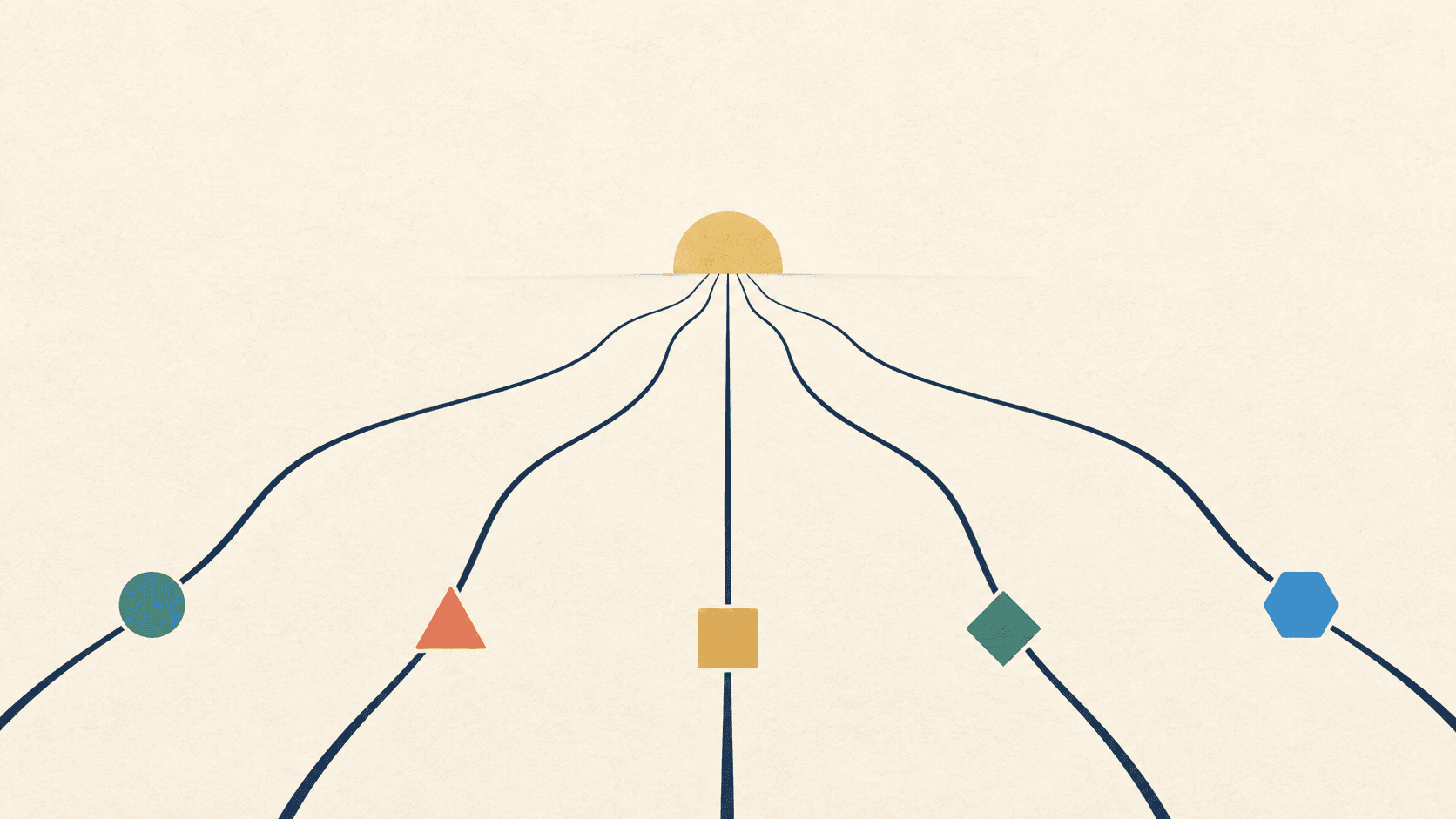
FIRE is not one finish line. It is a family of arrangements for needing less from a full-time job.
You may hear people say they are pursuing Lean FIRE, Fat FIRE, Coast FIRE or Barista FIRE. The labels can sound like different tribes. They are really shorthand for one question:
How will this household cover its needs - through spending choices, invested assets and some amount of work?
The answer can change over time. Someone may begin by reducing fixed costs, reach Coast FIRE in their forties, work part-time for several years and later choose a more traditional version of financial independence. There is no requirement to declare one identity forever.
Compare all five paths with your own spending: Open the Five FIRE Paths Calculator →
1. Lean FIRE: freedom on a deliberately light budget
Lean FIRE means funding a modest lifestyle from investments or other durable income. The goal is not deprivation. It is intentionally keeping necessary spending low enough that the required portfolio is smaller.
In real life, that might mean a paid-off or low-cost home, one car or no car, cooking most meals, inexpensive hobbies and little pressure to keep up with other people's consumption.
The strength is obvious: every permanently lower dollar of annual spending lowers the assets needed to cover it. The vulnerability is also obvious: a thin budget has less room for health costs, family changes, rent increases or a bad sequence of market returns.
Lean FIRE works best when the lifestyle is genuinely satisfying - not when it is an emergency budget stretched across decades.
2. Traditional FIRE: investments cover ordinary life
Traditional FIRE is what most people mean by financial independence: investments are intended to cover ongoing spending without needing employment income.
It does not mean never earning again. It means that work is optional rather than required to pay the bills. A person might still consult, make art, run a small business or take a temporary job because they enjoy it.
Its appeal is psychological as much as financial. You can say no to an employer, take time between jobs or structure a week differently. The hard part is that the portfolio must carry most of the load, so spending assumptions, taxes, healthcare and withdrawal risk matter a great deal.
3. Fat FIRE: more margin, more lifestyle spending
Fat FIRE is a version of financial independence built around a higher level of spending. It may include generous travel, a larger home, paid help, private education, expensive hobbies or simply a large buffer for the unknown.
There is nothing morally better or worse about wanting that. It is a different financial target. The challenge is that lifestyle costs can compound as quickly as investment returns. A larger house may bring higher insurance, maintenance, energy and tax costs; luxury is often a recurring system, not a one-time purchase.
Fat FIRE usually needs more invested assets, more years of earning, a very high savings rate, a business sale or some combination of all four. Its advantage is margin. Its risk is endlessly moving the definition of "enough."
What those three lives can actually feel like
The labels become more useful when you can picture an ordinary Tuesday, not just a withdrawal-rate spreadsheet. The examples below are deliberately fictional. They are not budgets to copy, and they would look very different in Amsterdam, Austin, Shanghai or a small town. They show the shape of the trade-offs.
Lean FIRE: a light, capable household
Imagine Maya and Tom, both in their late forties. They own a compact apartment outside a walkable Dutch city, bought years ago and now almost paid off. Their home is not a temporary compromise: it is close to the library, the train, a supermarket and friends. One bicycle each and a small shared car cover nearly every journey. The car is used for family visits or a wet-weekend trip, not for a daily commute.
Their food is ordinary but intentional. Breakfast is coffee, oats, fruit and eggs; most lunches are leftovers; they cook a large pot of soup, dhal or pasta twice a week. They happily go to a neighbourhood restaurant, but it is a planned pleasure once or twice a month rather than the default answer to a tired evening. Clothes are repaired, bought second-hand or chosen to last. Their entertainment is a museum card, hiking, swimming, books, friends at home and the occasional low-cost train weekend.
Their spending is low because the system is low-cost: a smaller home needs less heating and furnishing; cycling avoids a second car; home cooking avoids convenience spending. But the margin is narrow. If their rent rose sharply, the car failed, a parent needed help or a market decline lasted several years, they would notice. A cancelled holiday, freelance work for a season, or drawing more carefully from cash reserves may be part of the plan. That is not failure. It is the honest price of needing a smaller portfolio.
Traditional FIRE: an ordinary life without an employer at the centre
Now imagine Priya and Daniel. Their portfolio is designed to cover the life they had while working, with a little room for surprises. They live in a comfortable three-bedroom home in a medium-cost area. They replace appliances when they fail rather than urgently hunting for the cheapest option. They own one reliable car, take trains when practical, and occasionally fly to see family or take a holiday.
They still cook most weeknights, but they can say yes when friends suggest dinner. Their children can join local sports or music lessons; the household has insurance, dental care, a modest travel budget and an emergency fund. Priya spends two mornings a week volunteering and Daniel takes a course in woodworking. Neither activity needs to earn money. A winter with a higher energy bill is annoying, not destabilising.
The difference is not necessarily designer clothes or business-class flights. It is the ability to make normal choices without performing a calculation every time: replace worn shoes, help an adult child during a rough month, take a train instead of a painful overnight drive. In return, their portfolio carries most of the burden. They need a thoughtful withdrawal plan, taxes and healthcare included in the budget, and enough cash or bonds that they do not have to sell shares just because a bad year arrives.
Fat FIRE: comfort, delegation and a larger operating system
Finally, imagine Sofia and Mark. Their financial independence target supports a higher-spending household. They have a larger house with a garden, perhaps near an expensive city or in a desirable school area. They may pay for a cleaner twice a month, regular garden or pool maintenance, premium health cover, private lessons for a child, and several substantial trips a year. They buy durable, well-made clothes and equipment, but are also willing to pay for convenience: a taxi in bad weather, a last-minute train ticket, a hotel near family, a meal delivered during a difficult week.
Their freedom includes time that someone else provides. Delegating cleaning, maintenance, travel planning or childcare can make a real difference, especially when health or family obligations change. Fat FIRE can also mean a very large safety margin: supporting relatives, absorbing a major home repair, taking a long trip without asking whether it "fits the budget," or giving generously.
But this life has a much bigger operating system. A larger home has higher property tax, insurance, utilities, furnishing, repairs and often more travel by car. A pool or holiday property has costs even when unused. Private services and memberships tend to renew. The danger is not that the spending is immoral; it is forgetting that many comforts are subscriptions disguised as possessions. Fat FIRE works best when the household can name the parts that genuinely improve life, and can still distinguish them from status spending that keeps moving the finish line.
| Everyday area | Lean FIRE | Traditional FIRE | Fat FIRE |
|---|---|---|---|
| Home | Small, paid-off or low-cost; location reduces transport needs. | Comfortable and maintained; room for ordinary family life. | Larger, premium-location or service-heavy home; much higher running costs. |
| Food and clothing | Mostly home-cooked, repaired and second-hand where useful. | Mostly home-cooked with regular meals out and dependable replacements. | Convenience, quality and hospitality are routine options, not rare treats. |
| Transport and travel | Walk, cycle, transit; planned local trips. | Reliable car or transit plus periodic holidays and family travel. | Frequent travel, taxis, premium stays or multiple vehicles can fit. |
| When life goes wrong | Use cash buffer, trim optional spending, perhaps earn again. | Absorb many shocks without changing the weekly plan. | Absorb larger shocks and often pay to save time or reduce friction. |
None of these lives is automatically happier. A person who loves a compact home, cooking, cycling and a quiet week may find Lean FIRE abundant. A family with care responsibilities or expensive local healthcare may need a Traditional or Fat target just to feel safe. The useful question is not which label looks most impressive. It is which ordinary life feels generous enough before the good years arrive, and resilient enough when they do not.
4. Coast FIRE: the retirement portfolio is already doing its job
Coast FIRE means you have accumulated enough invested capital that, if left untouched for a long time, it could grow into a future retirement fund. You no longer need to make new retirement contributions for the plan to work - assuming returns and timelines cooperate.
You still need to earn enough to cover current life. But the pressure to maximize salary or keep saving aggressively can ease.
This can make a career pivot feel possible: moving to a lower-paid role, taking a sabbatical, choosing work with better hours or building a small business slowly. Coast FIRE is especially sensitive to assumptions about future returns, inflation and how long you have until withdrawals begin. It is an encouraging milestone, not a guarantee.
5. Barista FIRE: assets and part-time work share the load
Barista FIRE is a form of semi-retirement. Investments cover part of spending, while flexible or part-time work covers the rest. The job might be literally in a cafe, but the label now includes freelancing, seasonal work, teaching, consulting and small digital income streams.
This path can reduce the portfolio required for full retirement and lower the pressure of taking withdrawals during a bad market. It can also preserve routine, social connection and professional skills.
The trade-off is that the income is not fully passive. A realistic plan needs to include the time, variability, taxes and energy required to keep that work going. Use the Independent Income Freedom Calculator to see how a modest recurring income changes a semi-FIRE target.
These are mixes, not rankings
| If your main lever is... | You may be moving toward... |
|---|---|
| Lowering necessary spending | Lean FIRE |
| Building a portfolio to cover all needs | Traditional FIRE |
| Creating more spending margin | Fat FIRE |
| Letting existing investments compound while you cover today's costs | Coast FIRE |
| Keeping flexible income while drawing less from assets | Barista FIRE |
The categories overlap. A Lean FIRE household might also be Barista FIRE. Someone with a Fat FIRE portfolio may choose to work because they like the challenge. Someone who has reached a traditional FIRE number may not feel ready to leave work yet.
That is normal. Financial independence is not a switch that flips on a particular morning. It is a growing ability to choose.
Find the next useful milestone
The most practical question is rarely "Which FIRE type am I?" It is:
What change would give me more choice in the next one to three years?
That could mean building a cash buffer, reducing one fixed cost, testing a small independent income stream or increasing long-term investments. The milestones count even before the final number is reached.